The Importance of Laser Welding Technology in Medical Device Production
In the world of advanced manufacturing, precision is paramount. This is especially true for the production of medical devices, where the reliability, safety, and durability of products can significantly affect human health. As manufacturing demands increase, traditional welding methods are increasingly being replaced by more sophisticated, automated processes. Automatic laser welding heads are at the forefront of this revolution, offering unmatched precision and efficiency for medical device production.
This article explores the role of automatic laser welding heads in revolutionizing medical device production, highlighting their advantages, working principles, and the future of medical manufacturing.
What is an Automatic Laser Welding Head?
Definition and Components
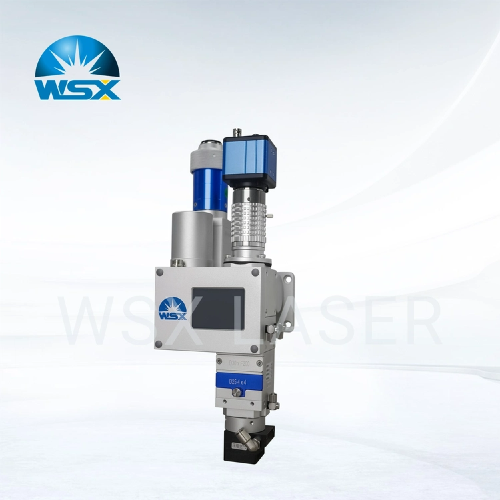
An automatic laser welding head is a key component in the laser welding process, designed to focus and deliver laser energy to a workpiece for precise welding. Unlike manual or conventional welding methods, this head is fully automated, allowing for high-speed, high-precision welding, especially in applications where the welds must meet extremely tight tolerances.
The laser welding head consists of several critical components:
Laser Source: A high-powered laser that generates the energy required for welding.
Optical Lens System: Focuses the laser beam onto the material.
Beam Delivery System: Directs the focused laser beam to the weld joint.
Cooling System: Maintains the appropriate temperature to prevent overheating of the system.
Control System: Manages the parameters such as laser power, speed, and focus position to ensure precise welding.
How Does it Work?
The automatic laser welding head works by emitting a highly focused laser beam onto the surface of the material being welded. The laser's intense energy melts the material at the weld site, creating a strong bond once the melted material cools and solidifies. By automating this process, the system ensures that the welding parameters remain consistent, thus providing high-quality welds with minimal human intervention.
Significance of Automatic Laser Welding Heads in Medical Device Production
Meeting the High Precision Demands
Medical devices, such as surgical instruments, implants, and diagnostic equipment, require precise, high-quality welds to ensure their functionality and safety. Even slight imperfections in the welding process can compromise the performance of medical devices and lead to catastrophic failures. An automatic laser welding head offers the precision necessary to meet the stringent standards in medical device manufacturing.
Versatility in Material Welding
Medical devices are often made from a variety of materials, including stainless steel, titanium alloys, and specialized polymers. Automatic laser welding heads are capable of welding these materials with high efficiency, providing consistent results across different material types. This versatility is especially crucial in the production of complex medical components that require precision in welding different materials.
Enhanced Weld Quality and Durability
The automatic laser welding head ensures that the heat input during welding is minimal, which prevents distortion and maintains the integrity of the material. This is particularly important for medical devices that are subjected to stresses during usage. The resulting welds are not only strong but also clean, reducing the need for post-weld cleaning and inspection.
Core Advantages of Automatic Laser Welding Heads
High Precision and Micro-Welding Capabilities
One of the primary advantages of using an automatic laser welding head in medical device production is its ability to perform high-precision micro-welding. Medical devices often require small, intricate welds that traditional welding methods cannot achieve with the same level of accuracy.
Micromachining: Capable of welding tiny components with high accuracy.
Minimal Heat Affected Zone (HAZ): The laser's focused energy limits the heat affected area, preserving the integrity of surrounding materials.
Low Heat Input for Minimal Distortion
Another key benefit of the automatic laser welding head is its ability to control the heat input. Traditional welding methods often introduce excessive heat, leading to distortion and compromising the material's structural integrity. With laser welding, the heat input is tightly controlled, reducing the risk of distortion and ensuring that the welded parts retain their original properties.
High Efficiency and Automation
The automation of the welding process increases production speed while reducing human error. The automatic laser welding head operates continuously, ensuring that the manufacturing process is efficient and cost-effective.
Continuous Operation: Automatic systems allow for non-stop production, increasing throughput.
Reduced Downtime: Automated systems have fewer failures and need less maintenance compared to manual operations.
Consistency and Reproducibility
Laser welding heads provide highly consistent results from one weld to the next. Once the system is calibrated, it can produce identical welds on every component, ensuring product uniformity. This consistency is especially crucial in medical device production, where the slightest variation in a component can lead to failure.
![Automatic Laser Welding Head]()
Comparing Automatic Laser Welding Head to Traditional Welding Methods
Feature | Automatic Laser Welding Head | Traditional Welding Methods |
Precision | High, micro-welding capabilities | Lower, limited to larger parts |
Heat Input | Low, minimal heat-affected zone | High, leading to distortion |
Automation | Fully automated, minimal human intervention | Requires skilled labor, manual control |
Efficiency | High, continuous operation | Lower, less consistent output |
Material Compatibility | Can weld a wide range of materials (steel, titanium, polymers) | Limited to specific materials and thicknesses |
Post-Weld Cleanliness | Clean welds, minimal residue | Often requires additional cleaning |
Technological Advancements and Future of Automatic Laser Welding Heads in Medical Device Manufacturing
Laser Power and Performance Advancements
Over the years, the power and efficiency of laser welding heads have improved, allowing for faster welding speeds and deeper weld penetration. These advancements make it possible to handle a broader range of materials, including more challenging alloys commonly used in medical devices.
Smart Control and Data Analytics
Modern automatic laser welding heads are equipped with intelligent control systems that monitor and adjust the welding parameters in real-time. This helps ensure that the welding process remains optimal under varying conditions, such as material inconsistencies or external environmental factors.
Real-time Monitoring: Sensors and data analytics provide feedback that allows for process adjustments during welding.
Predictive Maintenance: Data gathered from the welding head can predict potential failures, allowing for proactive maintenance and minimizing downtime.
Integration with Robotic Systems
The future of automatic laser welding heads lies in their integration with robotics and automation. Robotic arms equipped with laser welding heads are already being used in some high-precision applications. In the future, this combination will become even more prevalent, enabling the production of complex medical devices at unprecedented speeds and with higher precision.
Future Trends
Increased Speed and Power: The development of higher-powered lasers will enable faster and deeper welding.
Increased Automation: Greater integration with robotics and AI will lead to more efficient, cost-effective manufacturing processes.
Miniaturization: As medical devices become smaller and more intricate, the need for micro-welding will grow, and automatic laser welding heads will continue to evolve to meet these demands.
Conclusion
The future of medical device production is closely tied to advancements in welding technology. Automatic laser welding heads offer the precision, efficiency, and consistency essential for creating high-quality medical devices. As technology evolves, these systems will continue to improve, handling increasingly complex tasks with greater speed and accuracy.
At Shenzhen Worthing Technology Co., Ltd, we are at the forefront of this innovation. Our automatic laser welding heads are designed to meet the growing demands of the medical device industry, ensuring high-quality production with minimal human intervention. As manufacturers embrace automation, we are committed to providing cutting-edge solutions that enhance production efficiency and product reliability.
For companies aiming to stay competitive in the fast-evolving medical device market, investing in our advanced welding technology will be essential. We invite you to contact us to learn more about how our solutions can help optimize your manufacturing processes and drive future success in your industry.
FAQ
1. What is an automatic laser welding head?
An automatic laser welding head is a device used in laser welding that automatically controls the welding process. It focuses and directs the laser beam onto the material being welded, ensuring precision and efficiency.
2. How does an automatic laser welding head work?
It works by focusing a high-powered laser onto the workpiece, melting the material at the weld site. The automated system controls the welding parameters, ensuring consistency and precision.
3. What are the advantages of using an automatic laser welding head in medical device production?
Key advantages include high precision, minimal heat input, versatility for various materials, high efficiency, and the ability to produce clean, strong welds that meet medical device standards.
4. Can an automatic laser welding head be used on all materials?
Yes, automatic laser welding heads are versatile and can weld a wide range of materials commonly used in medical devices, including stainless steel, titanium alloys, and specialized polymers.
5. How does the automatic laser welding head compare to traditional welding methods?
Compared to traditional methods, automatic laser welding heads offer greater precision, lower heat input, higher efficiency, and automation, leading to more consistent and higher-quality welds.
6. What is the future of automatic laser welding heads in medical device manufacturing?
The future includes advancements in laser power, integration with robotic systems, and smarter control technologies, enabling faster, more efficient, and higher-precision production of medical devices.