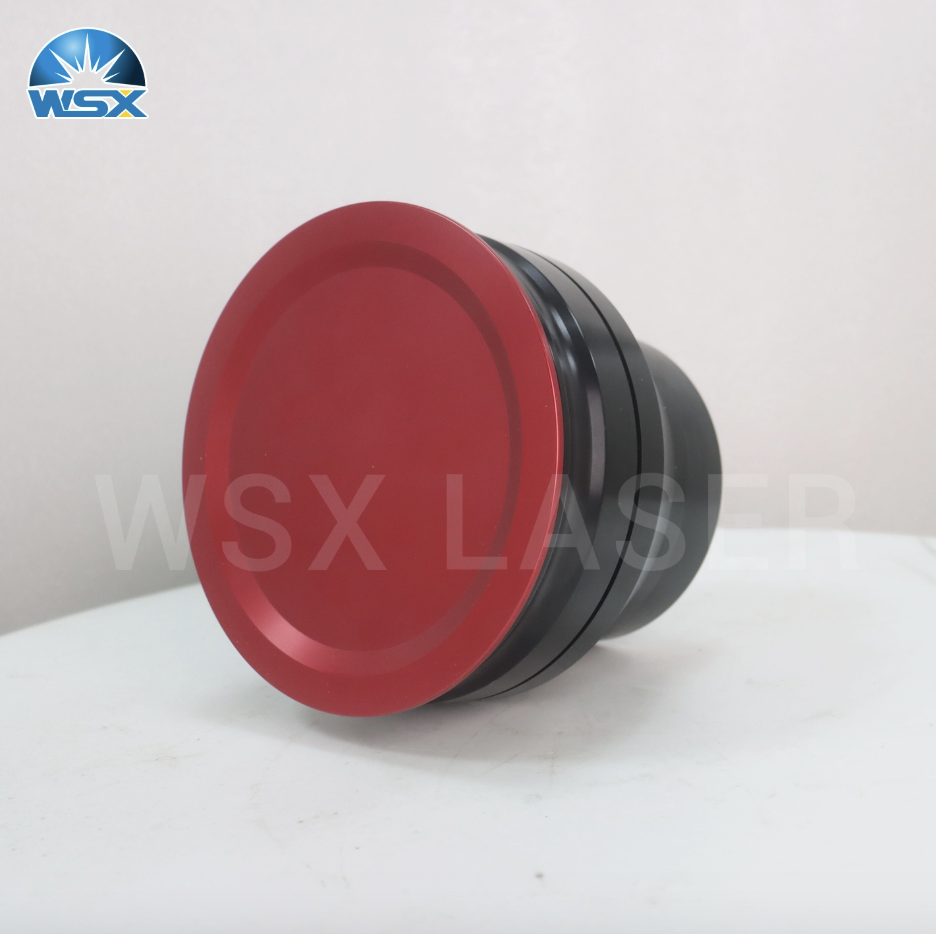
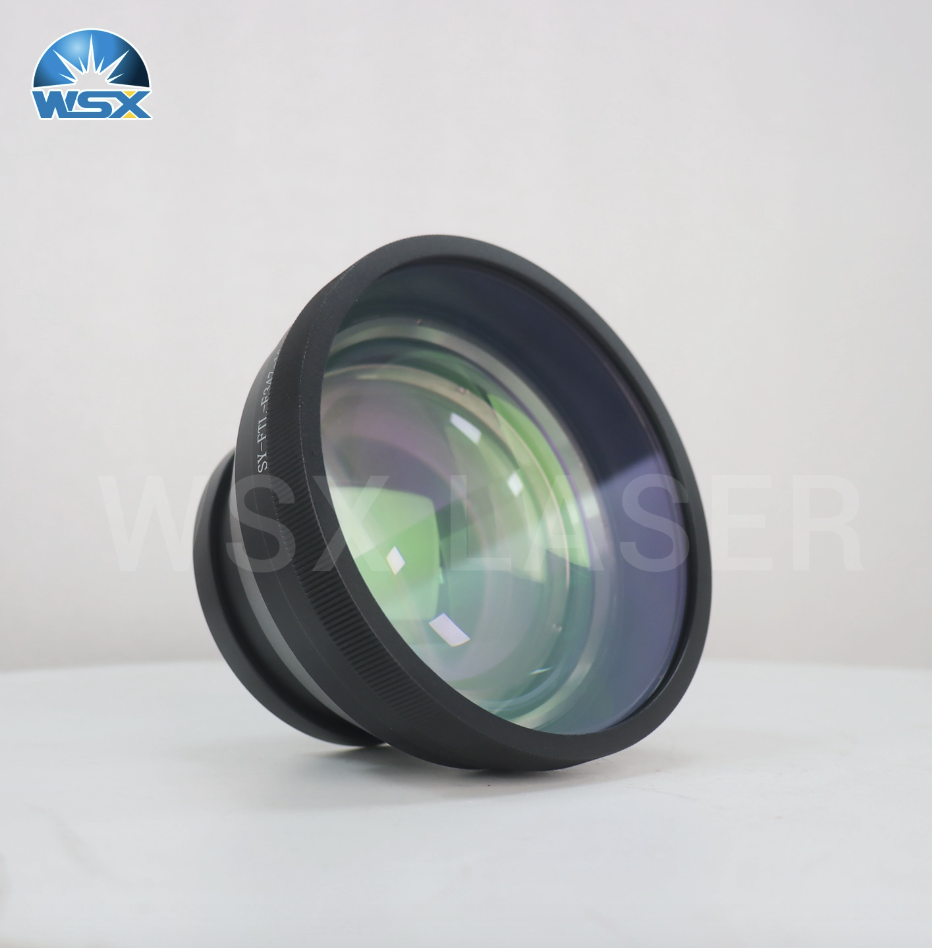
In industrial laser systems, precision is everything. They help mark, cut, weld, and inspect objects with accuracy that seems almost magical. Every small mistake in lens choice can lead to blurry markings, inconsistent cuts, or measurement errors. Two lenses often come up in discussions: telecentric lenses and F-theta lenses. At first glance, they might look similar, but they serve very different purposes. Understanding each lens, how it works, and where it excels can save time, reduce errors, and improve overall efficiency in your laser system.
Understanding Telecentric Lenses
What is a Telecentric Lens?
A telecentric lens is a specialized optical tool used for high-precision measurement and inspection. Unlike regular lenses, its design keeps the rays entering the lens parallel to the optical axis.
This parallel-ray design makes it possible for objects to appear the same size no matter how far they are from the lens. Imagine inspecting a PCB: even if some components are slightly higher or lower than others, their image size remains consistent. Distortion is minimized, angular errors are reduced, and measurements become more reliable. It’s a must-have in industries where accuracy is critical, such as electronics, semiconductor manufacturing, or quality control.
How Telecentric Lenses Work
Telecentric lenses are engineered so that the chief rays entering the lens remain parallel. This means the image does not change size even when the object moves closer or farther from the lens.
Measurement stays accurate across varying object heights
Distortion is nearly zero, making it easy to compare images or dimensions
Angular errors drop, ensuring that edges and shapes appear correctly
Think of it like looking through a perfectly calibrated window. The object doesn’t stretch or shrink, no matter how it moves. This principle is why telecentric lenses are widely used in automated inspection machines, where precision matters millimeter by millimeter.
Key Benefits
Telecentric lenses offer multiple advantages for industrial applications:
Maximum measurement accuracy: Ideal for high-precision visual inspections
Distortion-free imaging: Straight edges remain straight, circles stay circular
Uniform magnification: Every part of the field appears proportionally correct
Reliable in automated systems: Perfect for quality control and automated inspection
These benefits make telecentric lenses irreplaceable in environments where even small deviations could compromise product quality.
Common Applications
Telecentric lenses are not just theoretical tools; they are actively used in industries such as:
PCB inspection and assembly: Ensures tiny components are measured accurately
Precision cutting and drilling: Maintains correct alignment for laser or mechanical tools
Industrial quality control: Checks for defects, scratches, or misalignment on products
Visual measurement in automated systems: Used in robots and conveyor-based inspection setups
By keeping images consistent, these lenses make complex production processes much simpler and more reliable.
Wavelengths and Variants
Telecentric lenses come in multiple wavelength options to match various lasers or light sources:
UV: 355 nm, for fine material processing
Green: 532 nm, often used in marking plastics or metals
IR: 1030–1080 nm, suitable for laser cutting and welding
Far IR: 9.3 μm and 10.6 μm, used in CO₂ laser applications
They also come in single- or multi-wavelength versions, allowing flexibility depending on your material or process. Coatings and lens materials can further optimize them for specific laser powers and industrial environments.

Understanding F-Theta Lenses
What is an F-Theta Lens?
An F-theta lens is a cornerstone of laser scanning systems. It goes by other names too: flat-field lens, field lens, or linear lens. Its main purpose is to ensure the laser beam moves linearly across the working surface, keeping focus uniform.
Its scanning principle can be expressed mathematically:
[y = f \times \theta]
Here, y is the image height, f is the focal length, and θ is the scan angle. In practice, this formula ensures that the laser marks or cuts at precise distances, maintaining consistent focus and spot size. Think of it as giving the laser a “map” of exactly where to land.
How F-Theta Lenses Work
After the laser beam reflects off a galvanometer scanner, it enters the F-theta lens. The lens guides the beam in a nearly straight, linear path across the target surface.
Focus stays consistent, so markings remain sharp
Spot size remains uniform, preventing uneven cuts
The laser hits every point accurately, even at the edges of a wide field
It is like giving the beam “precision eyes.” Without it, the beam could blur or distort, especially during high-speed scanning or large-area marking.
Key Benefits
F-theta lenses provide advantages tailored for laser scanning and processing:
Wide scanning area: Covers larger work surfaces efficiently
High-speed performance: Ideal for dynamic laser systems
Uniform focus: Maintains consistent spot size across the field
Reliable results: Reduces errors during repetitive industrial processes
These features make F-theta lenses perfect for fast-paced production lines, where speed and accuracy must coexist.
Common Applications
Laser marking: Metals, plastics, ceramics, and other materials
Laser cutting and welding: Industrial parts, automotive components, and tools
Micromachining: Precision tools, molds, and medical devices
Large-scale or repetitive processes: Engraving logos, serial numbers, or detailed patterns
By maintaining consistent laser focus, F-theta lenses ensure that markings or cuts remain sharp, precise, and repeatable.
Wavelengths and Variants
F-theta lenses are compatible with multiple laser types:
UV: 355 nm, for micro-machining and engraving
Green: 532 nm, suitable for plastics or thin metals
IR: 1030–1080 nm, for high-power industrial lasers
Far IR: 9.3 μm, 10.6 μm, CO₂ lasers for cutting and engraving
Lens coatings, anti-reflection treatments, and materials enhance performance and lifespan, ensuring the beam stays consistent over extended use.

Telecentric Lens vs F-Theta Lens: Key Differences
Understanding the differences helps decide which lens fits a particular task.
| Feature | Telecentric Lens | F-Theta Lens |
| Beam Angle | Perpendicular, parallel rays | Varies with field, minor angular distortion |
| Field Coverage | Smaller, distortion-free | Wide, minor edge distortion |
| Precision | Maximum for measurements | High, slight edge distortion |
| Ideal Use | PCB inspection, precision measurement | Laser marking, cutting, welding |
| Speed | Moderate | High-speed scanning |
Telecentric lenses provide high precision and produce images that are essentially free from distortion. F-theta lenses enable fast scanning across wide areas while maintaining consistent focus. The best lens choice ultimately depends on the specific needs of the application.
How to Choose Between Telecentric and F-Theta Lenses
Precision vs. Speed
When deciding which lens to use, the first consideration is whether precision or speed matters more. Telecentric lenses excel in measurement and inspection because they minimize distortion and maintain consistent image size across the field. F-theta lenses, in contrast, are optimized for fast scanning over wide areas, making them ideal for marking, engraving, or cutting tasks where speed and coverage are priorities.
Field Size
The size of the working area also affects lens choice. F-theta lenses perform best on large surfaces, providing uniform focus across the entire scan field. Telecentric lenses work well in smaller areas where detailed inspection is required, ensuring every feature is measured accurately.
Application Type
The type of application strongly influences the decision. Measurement and inspection tasks favor telecentric lenses because their distortion-free imaging ensures precise results. Laser processing tasks, including marking, welding, and cutting, typically benefit from F-theta lenses, which combine high-speed scanning with consistent spot size.
System Compatibility
It’s important to confirm that the lens is compatible with your existing optical setup, the materials you work with, and the laser wavelength. Using the wrong lens can result in blurry images, uneven marks, or even damage to components.
Budget Considerations
High-precision lenses such as telecentric models may cost more initially. However, they can reduce errors, rework, and material waste, ultimately saving time and production costs. F-theta lenses also represent an investment, but they optimize speed and efficiency for large-scale laser processing.
FAQ
Q1: What is the main difference between telecentric and F-theta lenses?
The main difference is that telecentric lenses maintain a constant image size and minimize distortion for precise measurement, while F-theta lenses ensure linear scanning and uniform focus for fast and accurate laser marking or cutting.
Q2: Can I use a telecentric lens for laser marking?
Telecentric lenses are generally not ideal for wide-area laser marking because their design focuses on measurement accuracy rather than high-speed scanning or large coverage.
Q3: Are F-theta lenses precise enough for inspection?
F-theta lenses are precise, but they may show slight edge distortion, so they are better suited for processing tasks rather than high-accuracy inspection or measurement.
Q4: Which industries commonly use telecentric lenses?
Telecentric lenses are widely used in electronics, PCB manufacturing, semiconductor inspection, automotive quality control, and other industries where precise measurement is critical.
Q5: Which industries commonly use F-theta lenses?
F-theta lenses are commonly used in laser marking, cutting, welding, micromachining, and other industrial laser processing applications where speed and wide coverage are required.
Conclusion
Choosing the right lens can make a huge difference in industrial laser systems. Telecentric lenses excel in precision measurement and distortion-free imaging, making them ideal for inspection and quality control. F-theta lenses provide fast, wide-area scanning with consistent focus, perfect for marking, cutting, welding, and micromachining. Understanding their differences, applications, and strengths allows manufacturers to optimize both accuracy and efficiency in their production processes.
For businesses looking for high-quality optical solutions, Shenzhen Worthing Technology Co., Ltd. offers a comprehensive range of telecentric and F-theta lenses. Their products are designed to meet the demands of modern industrial laser systems, ensuring precision, reliability, and superior performance for every application. By partnering with them, companies can confidently achieve consistent results, reduce errors, and maximize productivity across all laser processing and inspection tasks.