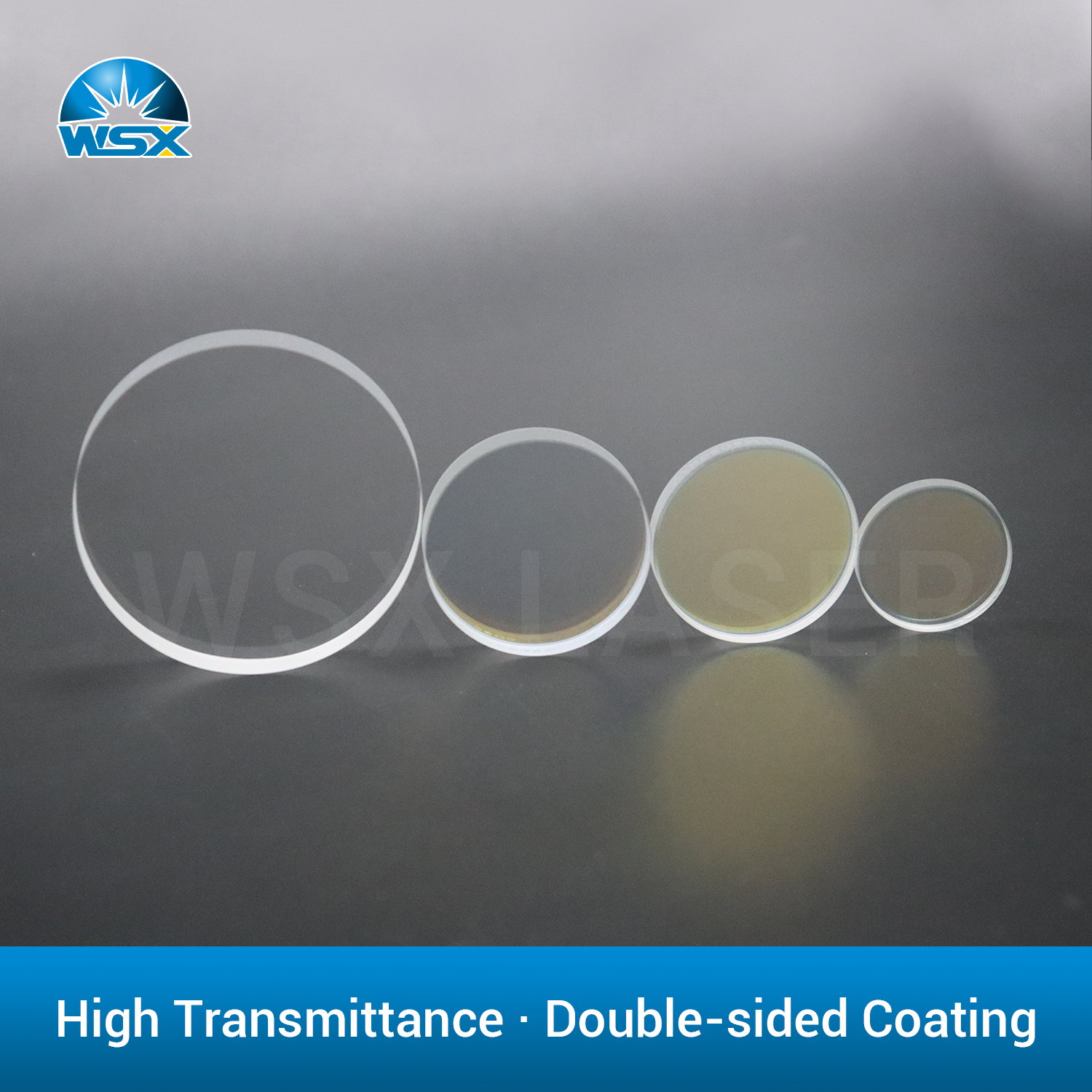
In high-power laser material processing, the optical path serves as the ultimate bottleneck. Even state-of-the-art laser sources cannot compensate for beam degradation caused by suboptimal focusing elements. Industrial systems rely entirely on precise energy delivery to function correctly. Poor lens selection or degrading optics routinely lead to thermal lensing, focal shifts, and highly inconsistent spot sizes. These seemingly minor deviations directly result in increased scrap rates, noticeably slower processing speeds, and unpredictable edge quality. Manufacturing teams quickly realize they cannot tune their way out of physical optical limitations. Move beyond basic optical theory to access a definitive evaluation framework. This guide thoroughly breaks down how specific lens characteristics translate directly to your manufacturing outcomes. You will learn practical ways to evaluate a long-term vendor for your critical system integrations.
Key Takeaways
Material and Coating Determine Thresholds: The choice between Fused Silica, ZnSe, and specific Anti-Reflective (AR) coatings dictates the Laser-Induced Damage Threshold (LIDT) and thermal stability.
Profile Dictates Precision: Aspheric and F-Theta lenses solve specific geometric anomalies (like spherical aberration and field curvature) that commodity spherical lenses cannot handle.
Hidden Costs in Commodity Optics: Frequent replacement and machine downtime often outweigh the upfront savings of lower-tier lenses.
Vendor Evaluation Requires Transparency: Sourcing from a reliable laser heads components supplier requires verifying batch-to-batch consistency, coating metrology, and QA documentation.
The Business Impact: Tying Beam Quality to Manufacturing Yields
Every manufacturing manager needs optical components to perform predictably across multiple production shifts. We define success in laser processing through three strict optical criteria. First, the lens must deliver consistent energy density at the exact focal point. Second, it must maintain a perfectly stable focal length even under extreme thermal loads. Finally, the optic must minimize beam scattering to protect surrounding machine components.
Accepting merely "adequate" optics introduces severe production penalties. Thermal lensing represents the most common failure mode in continuous operations. Microscopic absorption occurs within the lens coating or substrate material. This trapped energy rapidly heats the substrate. The heat temporarily alters the material's refractive index and alters its physical shape. As a result, the focal point shifts away from the material surface. You lose cutting power and penetration depth.
Beam distortion also ruins kerf width and edge quality. Imperfect lenses introduce optical anomalies like coma or astigmatism. These anomalies stretch the laser beam into an asymmetrical shape. Instead of a clean, straight cut, you get tapered edges or heavy dross accumulation. Operators then must route these parts to secondary finishing stations. This extra step drastically lowers your daily throughput.
Treating high-grade optics as simple maintenance items ignores their true value. We must view them as critical multipliers for Overall Equipment Effectiveness (OEE). High-quality lenses prevent sudden machine stoppages. They maximize equipment availability and ensure the first-pass yield remains exceptionally high. If you want peak machine performance, you must prioritize optical integrity above all else.
Core Specifications to Evaluate in Laser Optics Lenses
Your optical design begins at the substrate level. The base material dictates thermal stability, transmission rates, and operating limits. Selecting the wrong substrate guarantees premature system failure.
ZnSe (Zinc Selenide): This material serves as the global standard for CO2 lasers operating at the 10.6 µm wavelength. When sourcing ZnSe, you must meticulously evaluate bulk absorption rates. High bulk absorption directly causes catastrophic thermal runaway in multi-kilowatt systems.
UV Grade Fused Silica: This substrate remains strictly essential for high-power fiber and solid-state lasers operating near the 1 µm wavelength. It offers remarkably superior thermal stability. It features an incredibly low thermal expansion coefficient compared to standard optical glass.
Standard commercial tolerances consistently fail in industrial laser applications. Surface figure and roughness demand intense scrutiny. Surface figure measures how closely the actual lens surface matches the theoretical design. High surface accuracy directly prevents wavefront distortion. When wavefronts distort, the focal spot expands, and your power density collapses. You should demand a surface figure of at least lambda/10 for critical focusing applications.
The Laser-Induced Damage Threshold (LIDT) defines your absolute safety ceiling. We typically measure LIDT in Joules per square centimeter (J/cm²) for pulsed lasers or Watts per square centimeter (W/cm²) for continuous-wave systems. It represents the maximum optical power a lens can handle before irreversible physical damage occurs.
Engineers must always over-specify LIDT. High-power systems frequently experience sudden back-reflections from highly reflective materials like copper or aluminum. Localized beam hot-spots also generate massive energy spikes. An elevated LIDT rating provides a mandatory safety margin against these unpredictable operational hazards. Sourcing dependable Laser Optics Lenses ensures you receive accurately rated LIDT values backed by rigorous metrology.
Standard Substrate Comparison
Substrate Material
Primary Wavelength
Key Advantage
Typical Application
Zinc Selenide (ZnSe)
10.6 µm
High IR transmission
CO2 Laser Cutting & Welding
UV Grade Fused Silica
1064 nm
Low thermal expansion
Fiber Laser Processing
N-BK7 (Optical Glass)
Visible / NIR
Cost-effective manufacturing
Low-power alignment lasers
How Lens Profiles Dictate Processing Capabilities
The physical curvature of a lens dictates how it bends light toward a focal point. Basic designs cannot handle the stringent demands of modern manufacturing. We rely on advanced geometrical profiles to achieve necessary energy concentrations.
Spherical Lenses: These feature a constant curve radius. Manufacturers produce them quickly and cost-effectively. However, they introduce a severe flaw known as spherical aberration. Light rays passing through the edge of the lens do not focus at the exact same point as rays passing through the center. This scatters energy and blurs the focal spot.
Aspheric Lenses: These utilize complex, varying curvatures across their surface. They specifically correct spherical aberration. An aspheric profile condenses the laser energy into a tighter, diffraction-limited spot. This tight concentration exponentially increases cutting speeds and precision. The operational benefits easily justify their higher upfront production cost.
F-Theta Scanning Lenses: Galvanometer systems require these specialized optics. Standard lenses focus beams onto a curved plane. F-Theta lenses correct this field curvature, ensuring a perfectly flat scanning field. We use them extensively in laser marking, deep engraving, and additive manufacturing. When evaluating F-Theta designs, you must verify telecentricity and linearity accuracy across the entire working field.
Beam Shapers & Axicons: Certain processes require uniform energy distribution rather than a sharp peak. Beam shapers convert standard Gaussian beams into flat-top profiles. This uniform intensity proves highly critical for consistent laser welding, surface hardening, and selective ablation processes.
Implementation Risks: Lifespan, Degradation, and Contamination
Pristine lab environments rarely reflect actual shop floors. Lab-tested optical performance degrades rapidly in real-world environments. Laser processing inherently generates violent byproducts. Weld spatter, vaporized metal fumes, and ambient humidity constantly attack the optical path. Unprotected lenses will quickly absorb these contaminants, leading to catastrophic failure.
Operators must deploy sacrificial protective windows, commonly called cover glasses. These flat optics sit directly below the primary focusing lens. They block debris while transmitting the laser beam. Operating without cover glasses virtually guarantees the rapid destruction of expensive primary optics. You must monitor and replace these windows diligently.
Maintenance teams need to recognize early optical failure modes. Coating delamination appears as slight discoloration or flaking on the lens surface. Burn-in creates visible pitting or permanent cloudy spots. Differentiating between optic failure and laser source drift requires a systematic approach. If beam quality improves immediately after swapping the cover glass or lens, the optics were compromised. If the issue persists, the laser source or delivery fiber likely requires diagnostics.
Strict, standardized maintenance protocols are absolutely non-negotiable. Proper cleaning maximizes the lifespan of premium lenses. Technicians should only use optical-grade solvents and lint-free wipes. The "drop-and-drag" cleaning method prevents microscopic scratching. Touching optical surfaces barehanded leaves oils that instantly burn into the anti-reflective coating upon laser activation.
Shortlisting a Laser Heads Components Supplier: A Procurement Framework
Relying purely on catalog specifications introduces massive operational risks. A generic data sheet rarely tells the full story regarding quality control. You must aggressively assess a supplier's actual manufacturing, coating, and testing capabilities. A true manufacturing partner openly shares their production metrology data.
Use the following evaluation criteria to qualify any potential optical vendor:
Metrology & QA: Never accept unverified components. Ask if they provide precise interferogram reports. Request batch-specific transmission curves generated by calibrated spectrophotometers. These documents prove the lens actually meets its stated tolerances.
Coating Capabilities: Discover whether they handle coating in-house or outsource it. Elite manufacturers utilize advanced techniques like Ion Beam Sputtering (IBS). Can they provide low-absorption AR coatings tailored exactly to your specific wavelength and power level?
Traceability: Industrial consistency demands rigorous traceability. You need strict batch-to-batch consistency. Without it, you risk sudden drops in machine performance after a routine lens replacement. Serialized components allow you to track performance anomalies back to a specific production run.
Technical Partnership: Find out if the vendor offers failure analysis for damaged optics. A top-tier laser heads components supplier will gladly examine a blown lens. They will help you troubleshoot system-level issues, such as poor assist gas flow or back-reflection damage.
Supplier Procurement Assessment Chart
Assessment Category
Basic Supplier Standard
Premium Supplier Standard
Metrology Data
General catalog specs
Batch-specific interferogram reports
Coating Production
Outsourced, standard AR
In-house, custom low-absorption AR
Component Traceability
Bulk packaging, no serialization
Laser-marked serials, full tracking
Engineering Support
Sales-only contact
Failure analysis and integration consulting
Conclusion
Laser optics lenses function far beyond the realm of standardized commodities. They act as high-precision instruments dictating the absolute performance ceiling of your processing system. Poor substrate selection, flawed surface figures, and inadequate coatings actively destroy your production yields. By understanding how thermal lensing, optical profiles, and real-world degradation work, you can engineer highly resilient machine setups.
You must shift your procurement mindset immediately. Stop searching for the lowest initial price per lens. Instead, source components designed for exceptional thermal stability and minimal absorption. This approach secures the lowest cost per consistent focal spot. It protects your machine uptime and virtually eliminates rework caused by poor edge quality.
Audit your current optical failure rates today. If you replace focusing components frequently, or if focal points shift midway through a shift, your specifications are lacking. Contact your engineering team to review system requirements and challenge your current vendors to supply proper metrology documentation.
FAQ
Q: What causes thermal lensing in high-power fiber lasers?
A: Thermal lensing stems from microscopic impurities within the lens substrate or anti-reflective coating. These impurities absorb a small fraction of the laser's immense energy. The absorption generates localized heating, which expands the material and changes its refractive index. This effect dynamically alters the curvature, causing the focal point to shift uncontrollably during operation.
Q: How often should laser optics lenses be replaced?
A: Replacement schedules must remain condition-based rather than time-based. You should monitor operational indicators like noticeable focal shifts, declining cut quality, or visible dross. Frequent replacement of the inexpensive sacrificial cover glass protects the main focusing lens. If operators maintain the cover glass properly, premium focusing lenses can last many months or even years.
Q: Why is Fused Silica preferred over standard glass for fiber lasers?
A: UV Grade Fused Silica features an incredibly low thermal expansion coefficient compared to standard optical glasses like N-BK7. It also offers exceptionally high transmittance at the 1 µm (1064nm) wavelength typical of fiber lasers. This combination ensures the lens maintains its geometric shape and optical clarity under intense multi-kilowatt thermal loads.
Q: What is the difference between a focusing lens and a collimating lens in a laser head?
A: These lenses serve opposite functions in the beam path. A collimating lens captures highly divergent light exiting the delivery fiber. It refracts this light into a parallel, straight beam. The focusing lens sits further down the optical path. It takes that parallel beam and converges it into a tiny, high-intensity focal spot for material processing.